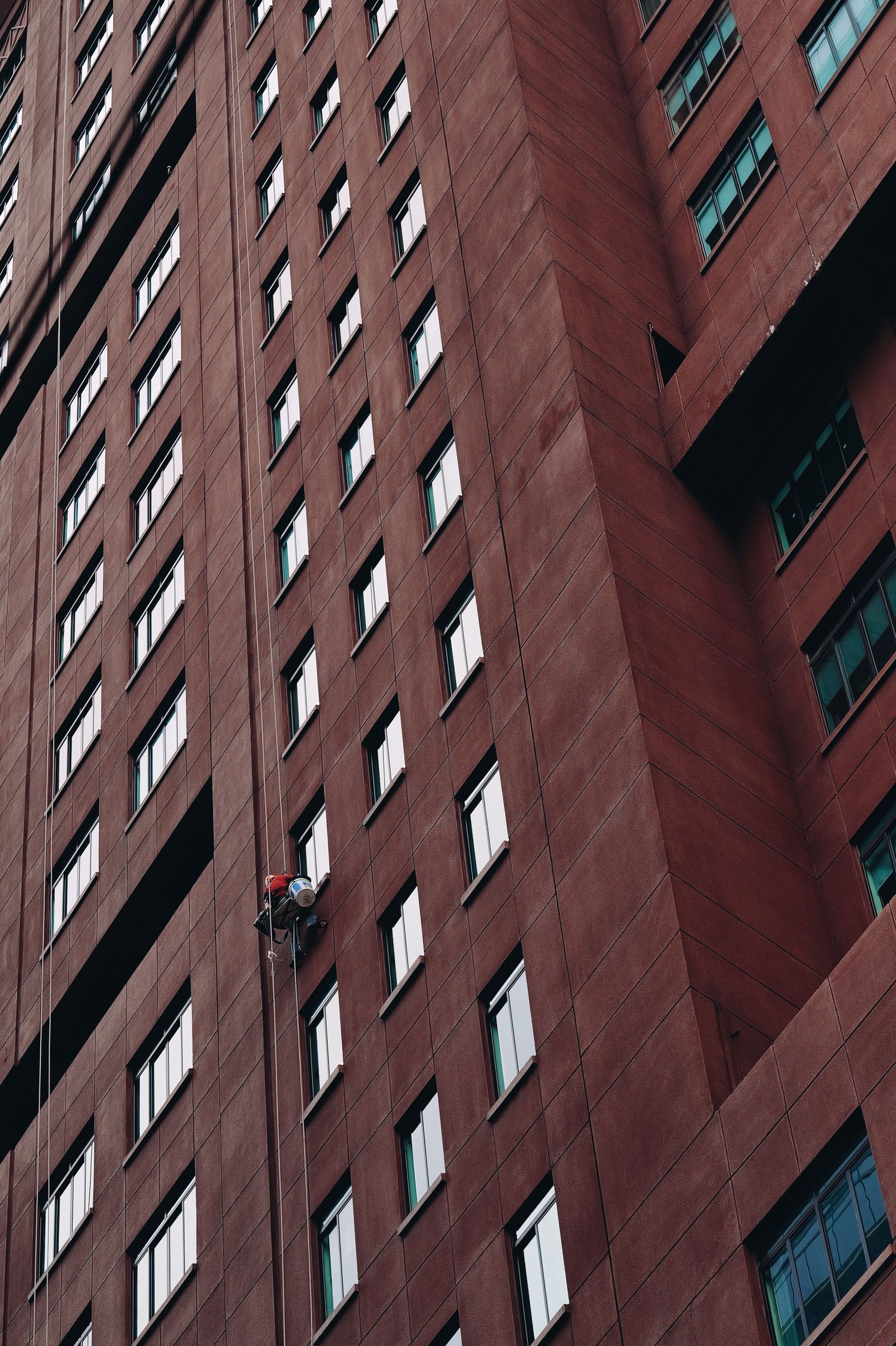
Compare the entire ground footprint, not just the machine
A lift is visible and easy to picture, so property teams sometimes compare its size with a drone and conclude that the aircraft must create less disruption. The complete comparison is broader. A lift needs a setup point, load-bearing surface, outriggers or stabilizers where applicable, overhead clearance, operating radius, and room to reposition. A drone needs a launch and recovery area, clear command visibility, separation from people and property, water delivery, hose routing, a spotter or ground team, and a method to secure the area. On a private courtyard, either approach may work. On a narrow San Francisco sidewalk, the drone's support footprint can still be the limiting factor.
The better method is the one that preserves the building's required operations while maintaining control. A hotel near Union Square may prefer a phased plan that keeps guest arrival moving. A South Beach office may need to keep a loading lane open. A SoMa property may have deliveries, bikes, transit activity, and adjacent construction. A lift can be efficient when it can sit safely and reach several bays without repeated moves. A drone can be efficient when the target is broad, the access line is clear, and the ground team can operate from a controlled area. The quote should show the complete setup for both options before selecting one.
- List equipment, people, hose routes, barriers, and recovery space for each method.
- Check sidewalk, loading, accessible-route, and emergency-access impacts.
- Compare repositioning time rather than looking only at equipment dimensions.
- Treat a smaller aircraft footprint as a possibility, not an automatic result.
Choose the tool that matches the finish
Drone-assisted cleaning is strongest when the building needs controlled wetting or rinsing across a compatible, relatively broad surface. Loose dust, pollen, light atmospheric film, and some surface growth can respond well when the chemistry, water quality, dwell, and rinse are appropriate. A lift is stronger when the finish depends on contact: squeegee work, detailed mullions, agitation in corners, scraping, bonded deposit removal, or close treatment of a specific panel. If the property needs a hand-cleaned appearance at every pane, a remote rinse should not be presented as equivalent simply because it reaches the glass.
The condition behind a stain also matters. Mineral deposits, construction residue, paint, silicone, oxidation, and damaged coatings may remain after a drone rinse. More pressure is not a substitute for identifying the material. A representative test can show whether the proposed method meets the acceptance standard or whether the scope needs direct access, restoration, or a different expectation. The right answer may be a hybrid: aerial rinsing on open upper bands, a lift for the entrance and detail zones, and hand work at the locations where appearance or material sensitivity demands it.
Let San Francisco geometry decide elevation by elevation
A building is rarely one simple plane. Setbacks, balconies, canopies, fins, deep reveals, rooftop screens, signs, mechanical equipment, and neighboring roofs can interrupt an aircraft's line of application or a lift's reach diagram. A drone may work well on a broad face and poorly inside a recess. A lift may reach a lower bay but have no acceptable setup point for the setback above it. The access review should identify each elevation, the obstacles around it, and the finish required there rather than forcing one method across the whole property.
Local context helps explain why two nearby buildings need different plans. A Financial District tower may have tight pedestrian exposure and strong wind at corners. A Mission property may have storefronts and adjacent residences that limit water drift. A waterfront elevation may have more exposure to wind and salt residue. San Francisco Planning resources can help organize neighborhood context, but they do not approve an access method. The address, parcel, surrounding right of way, materials, weather, and operating controls decide whether the proposed work is practical.
Weather, water, and runoff can reverse the decision
Wind around taller buildings is not always represented by the curbside forecast. A lift has manufacturer limits and can become unsuitable in gusts; a drone can lose useful control or create unacceptable drift. Fog, rain, wet pavement, and rapid changes at exposed corners affect both methods. A credible plan sets limits and gives the crew authority to pause. The important comparison is not which machine can be mobilized first, but which method can operate inside a conservative weather window and still provide the intended finish.
Water logistics are also part of the access decision. A lift may place a technician close to the surface but still require long hose runs and ground protection. A drone may keep heavy equipment away from the facade but still need water source, flow, recovery, drain controls, and a safe route across the site. San Francisco stormwater requirements make it important to plan where water and soil go. A method that reaches the facade but cannot control runoff is not a complete service plan. Water source, quality, containment, drains, inlets, entrances, and neighboring property should be compared alongside height and reach.
- Set wind and precipitation limits for both aircraft and lift equipment.
- Evaluate drift and water behavior at the highest work elevation.
- Map water, hoses, drains, storm inlets, doors, and public routes.
- Include a reschedule plan when control or drying is compromised.
Use the quote process to make the decision measurable
A good access comparison gives a property team more than a preferred tool. It describes the target elevations, surface condition, expected finish, setup and recovery space, water and runoff controls, public interfaces, schedule, exclusions, and fallback method. It also explains which areas will not be treated if the conditions change. That allows ownership and engineering teams to compare disruption, risk, and result rather than selecting the newest-looking equipment.
The final recommendation may be a drone, a lift, a hybrid, a conventional method, or no work until a facade professional addresses a condition. Cracked glass, loose materials, open joints, active leakage, or unstable attachments should be referred before cleaning. Documentation after the work should show what was completed and what remains. For San Francisco properties, that record supports recurring maintenance decisions as traffic, construction, tenant use, and weather change across the year.